Aggregators Redefining Disparity Identification Across Worldwide Sports Betting Networks
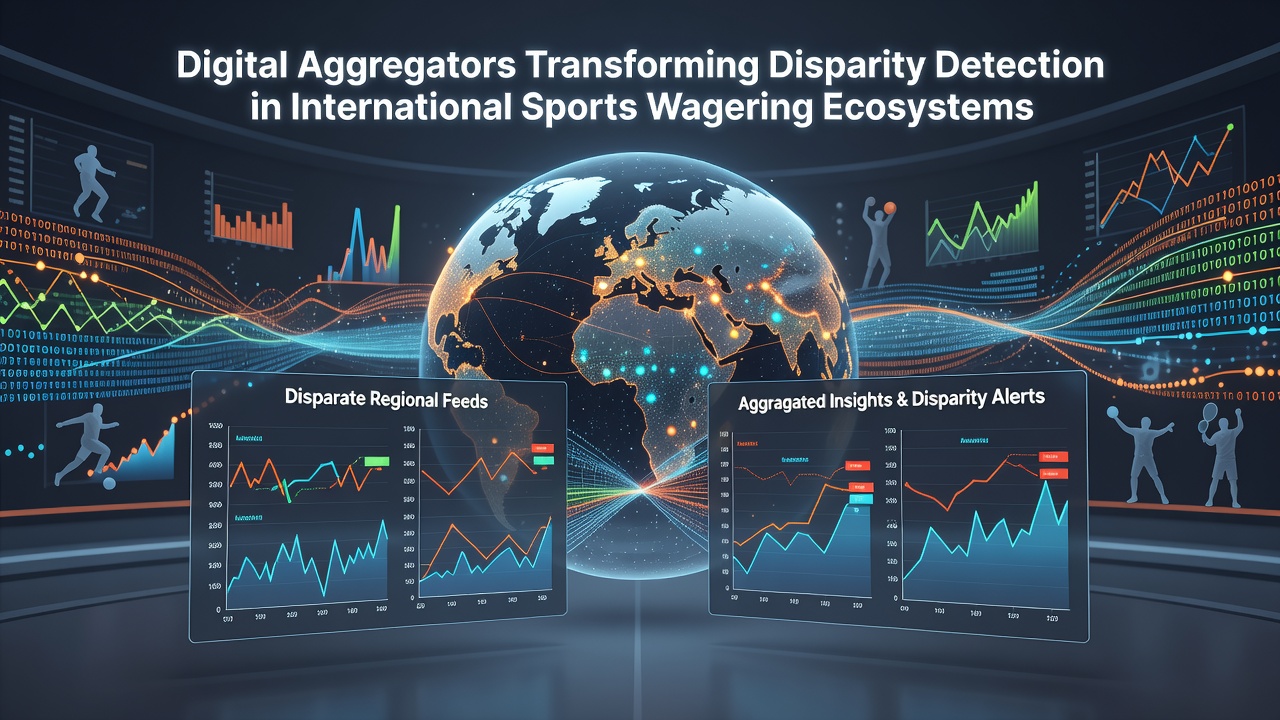
Digital aggregators now collect and process live odds data from operators spanning dozens of countries, allowing rapid identification of pricing differences that emerge between platforms. These systems pull feeds from European exchanges, Asian bookmakers, North American sportsbooks, and emerging markets in Latin America and Africa, then apply algorithms that flag inconsistencies within seconds of each update. Observers note that the scale of coverage has expanded significantly since 2023, driven by improved API access and cloud-based processing power.
Core Mechanisms Behind Aggregator Operations
At the foundation of each aggregator sits a network of data pipelines that normalize odds formats, account for currency fluctuations, and adjust for regional betting rules. Machine learning models compare these normalized values against historical patterns, highlighting instances where implied probabilities diverge beyond expected thresholds. Researchers at institutions such as the University of Nevada, Las Vegas have documented how such models reduce detection latency from minutes to milliseconds, creating opportunities for coordinated betting across borders before markets realign.
Disparity detection extends beyond simple price gaps. Aggregators also monitor line movement velocity, liquidity indicators, and cross-sport correlations that can signal mispricings in related events. One study released by the International Betting Integrity Association in early 2025 showed that systems incorporating these additional variables identified roughly 18 percent more actionable discrepancies than basic price-comparison tools alone.
International Reach and Data Integration Challenges
Operators licensed in Malta, Gibraltar, the Isle of Man, and various Australian states contribute feeds to the same aggregator pools, yet each jurisdiction maintains distinct reporting requirements and data latency standards. Aggregators therefore deploy regional edge servers that synchronize information through standardized protocols while respecting local data residency rules. This architecture allows a single platform to surface opportunities involving a tennis match in Melbourne, a football fixture in São Paulo, and an ice hockey game in Stockholm within the same scan cycle.
Regulatory bodies outside the United Kingdom have begun publishing guidance on aggregator usage. The Australian Communications and Media Authority issued updated compliance notes in March 2026 that require operators to maintain audit logs of aggregator queries, while the New Jersey Division of Gaming Enforcement introduced similar record-keeping mandates effective July 2026. These measures aim to ensure transparency without restricting access to the underlying technology.
Case Examples from Different Regions
Take one aggregator service operating across Southeast Asia and Europe. In April 2026 it flagged a discrepancy in basketball totals between a Thai operator and a Spanish exchange, where the over/under line differed by 3.5 points after currency conversion. Bettors who acted on the signal placed opposing wagers through two separate accounts, locking in a margin before either book adjusted. Similar patterns appear in cricket markets between Indian and South African platforms, where session-based odds frequently diverge during live play.
Another aggregator focused on Latin American football detected value in half-time draw lines that appeared only after Brazilian and Mexican books published conflicting injury reports. The system cross-referenced social media timestamps with official league feeds, confirming the information gap within 90 seconds and routing alerts to subscribers across four continents.

Technological Evolution and July 2026 Developments
By July 2026 several aggregator providers had integrated quantum-resistant encryption layers to protect proprietary scanning algorithms from reverse-engineering attempts. They also expanded coverage to include emerging prediction markets in Canada adn regulated esports platforms in South Korea. Data from the American Gaming Association indicates that cross-border data volume processed by major aggregators grew 27 percent year-over-year through the first half of 2026, reflecting both market expansion and deeper integration with live streaming sources.
These platforms now incorporate natural language processing to parse non-English betting rules and settlement conditions, reducing false positives that previously arose from misinterpretation of local terminology. Experts at the Asia Pacific Association of Gaming Regulators reported in a June 2026 briefing that standardized settlement vocabularies helped cut dispute rates by approximately 12 percent among operators using shared aggregator services.
Market Impact and Stakeholder Responses
Bookmakers have responded by adjusting internal pricing engines to incorporate aggregator-derived signals, effectively narrowing the window for external exploitation. Some have begun offering their own premium data feeds to aggregators in exchange for early visibility into competitor movements. Industry analysts observe that this reciprocal arrangement has stabilized margins for larger operators while smaller regional books continue to rely on manual monitoring.
Academic researchers continue to examine how aggregator-driven disparity detection influences overall market efficiency. A working paper from the University of Sydney Business School released in May 2026 analyzed 2.4 million betting events and concluded that markets with high aggregator penetration exhibited 9 percent lower average price variance than those with limited aggregator activity.
Conclusion
Digital aggregators have become central infrastructure within international sports wagering ecosystems, supplying the computational backbone for disparity detection at unprecedented speed and scale. Their continued evolution through 2026 reflects ongoing adaptation to regulatory changes, technological advances, and expanding geographic coverage. As more jurisdictions formalize rules around data access and audit requirements, these platforms will likely maintain their position as primary tools for identifying pricing inconsistencies across borders.