Connecting Aggregator Feeds to Calculator Workflows for Cross-League Discrepancy Detection
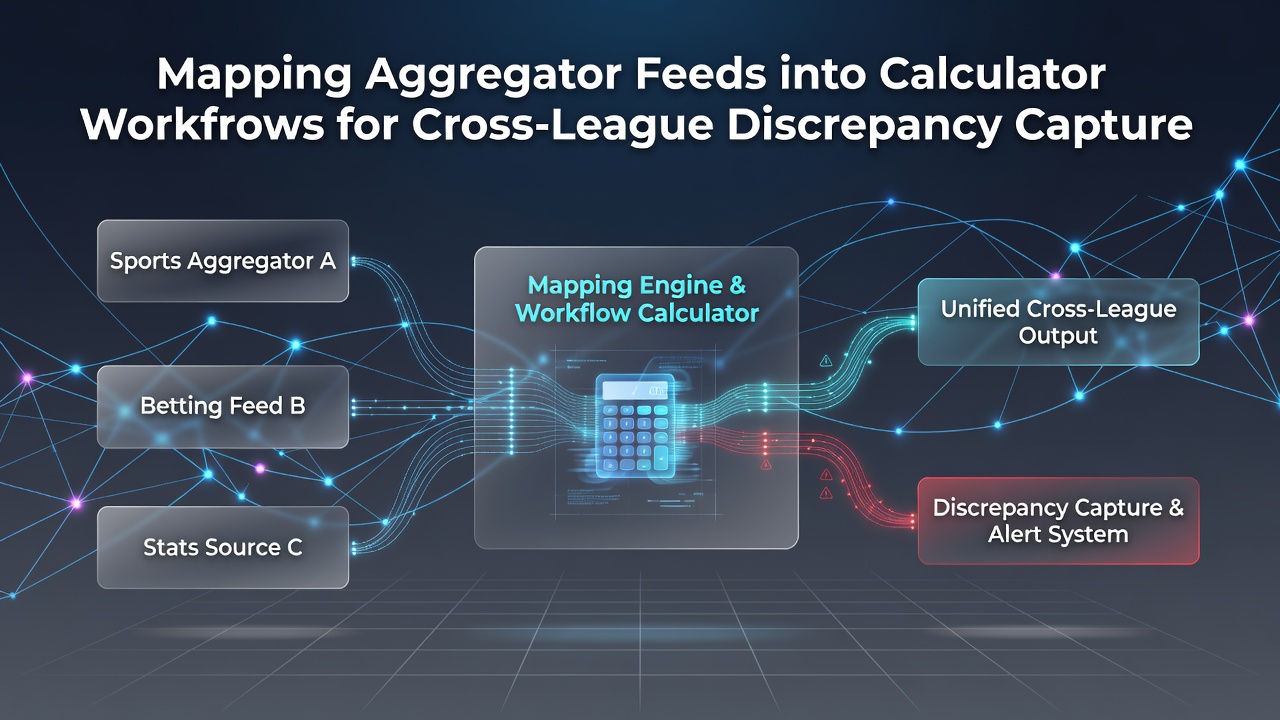
Betting platforms have expanded their data pipelines in recent years, and aggregator services now collect real-time odds from dozens of bookmakers operating in separate leagues and competitions. Those feeds arrive in standardized formats such as JSON or XML, yet the raw numbers require careful mapping before they enter calculation engines designed to flag profitable discrepancies. Observers note that the process begins with field matching, where each league identifier, market type, and outcome label receives a consistent tag so the calculator can compare apples to apples across soccer, basketball, and hockey lines simultaneously.
Feed Structure and Initial Mapping Steps
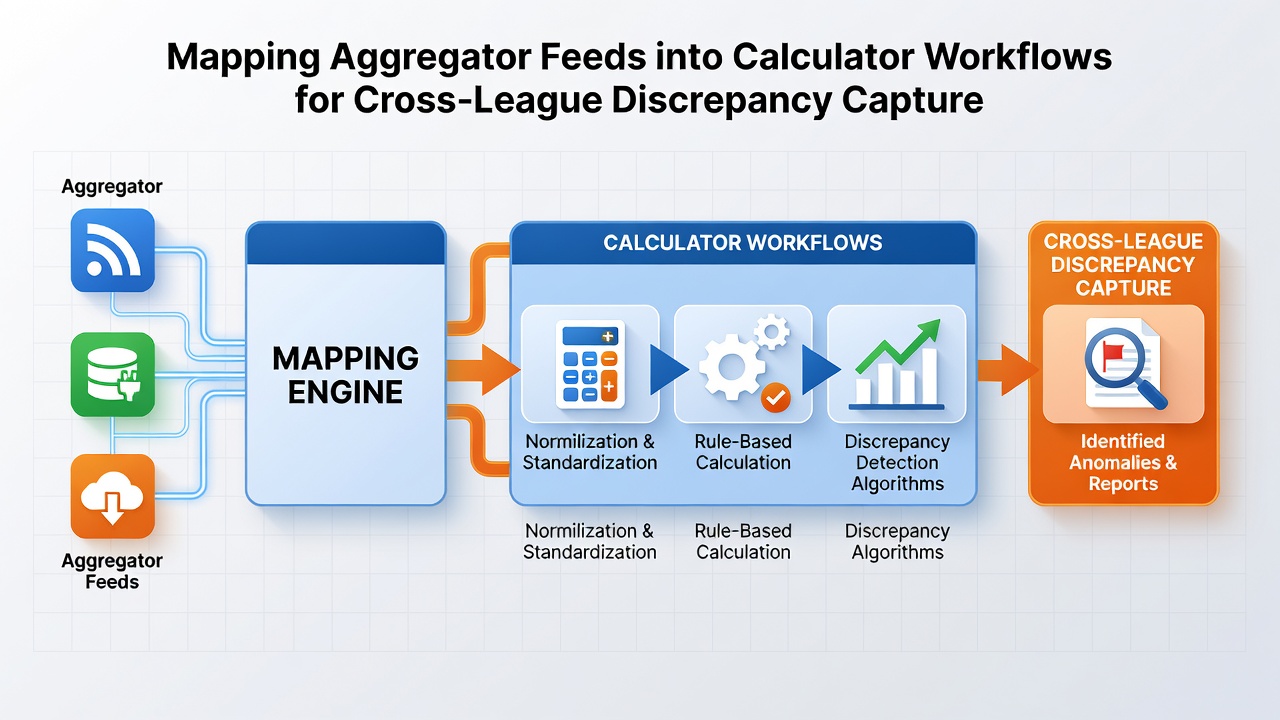
Aggregators typically deliver timestamped price points along with metadata that includes league codes, event identifiers, and bookmaker sources. Teams handling these streams first parse the incoming packets and assign each data point to a canonical schema, which allows the downstream calculator to treat equivalent markets from different leagues as comparable records. The mapping layer also normalizes currency and stake units so the workflow produces outputs in a single base currency without manual intervention.
Once the schema alignment finishes, validation rules check for missing fields or inconsistent timestamps that could distort later calculations. Research from the Nevada Gaming Control Board indicates that standardized data exchange protocols have reduced parsing errors by measurable margins in regulated markets, and similar practices have spread to international operators. The validated feed then moves into a staging area where league-specific rules apply, such as adjusting for overtime markets in hockey versus regular-time markets in soccer.
Calculator Workflow Integration
Calculators built for arbitrage detection rely on the cleaned feed to run simultaneous comparisons across dozens of events. The workflow splits into parallel threads: one thread scans for intra-league differences while another thread examines cross-league correlations, looking for pricing gaps that appear when bookmakers in one competition price related outcomes differently from those in another. Data from industry reports shows that these cross-league scans often surface opportunities during overlapping fixture periods, particularly when major tournaments coincide with domestic league rounds.
Users configure tolerance thresholds inside the calculator so that only discrepancies exceeding a chosen margin trigger alerts. The engine then calculates implied probabilities, converts them into decimal or fractional formats, and determines the stake distribution required for a locked return. Because the mapping layer already normalized league identifiers, the same calculator instance can process an English Premier League match alongside an NBA game without separate configuration files.
Handling League-Specific Variables in July 2026
By July 2026 several major leagues had adjusted their scheduling calendars, creating more frequent overlaps between European summer tournaments and North American off-season exhibitions. The mapping layer required updates to accommodate new event codes and market types introduced during those periods. Calculators flagged an increase in cross-league discrepancies when pricing models from one region had not yet incorporated the revised fixture lists from another. Operators who maintained current mapping tables captured those temporary edges before prices converged.
Additional variables such as weather impacts on outdoor sports or travel schedules for international teams also enter the workflow through supplementary data fields. The calculator applies weighted adjustments once the core odds sit inside the mapped schema, preserving the original feed integrity while layering contextual factors on top.
Performance Monitoring and Output Delivery
After each calculation cycle the system logs the number of mapped records processed, the count of discrepancies identified, and the average margin captured. Teams review these metrics through dashboards that highlight leagues where aggregator coverage remains thin or where mapping conflicts recur. Reports from the Australian Competition and Consumer Commission on digital market transparency note that consistent data quality monitoring correlates with fewer downstream pricing errors across betting operators.
Alerts reach end users through API pushes or web interfaces, each message containing the mapped league identifiers, the calculated stake split, and the source bookmakers. Because the workflow already reconciled currencies and formats, recipients receive ready-to-execute figures rather than raw data requiring further manipulation.
Conclusion
The integration of aggregator feeds into calculator workflows rests on precise schema mapping, validation routines, and league-aware configuration that together enable reliable cross-league discrepancy detection. As scheduling overlaps continue and data volumes grow, operators maintain these pipelines through regular updates to field definitions and tolerance settings. The resulting system delivers consistent outputs that reflect current market conditions across multiple competitions without requiring separate tools for each league.