Decoding the Data Streams That Connect Disparate Betting Markets to Highlight Temporary Pricing Inefficiencies
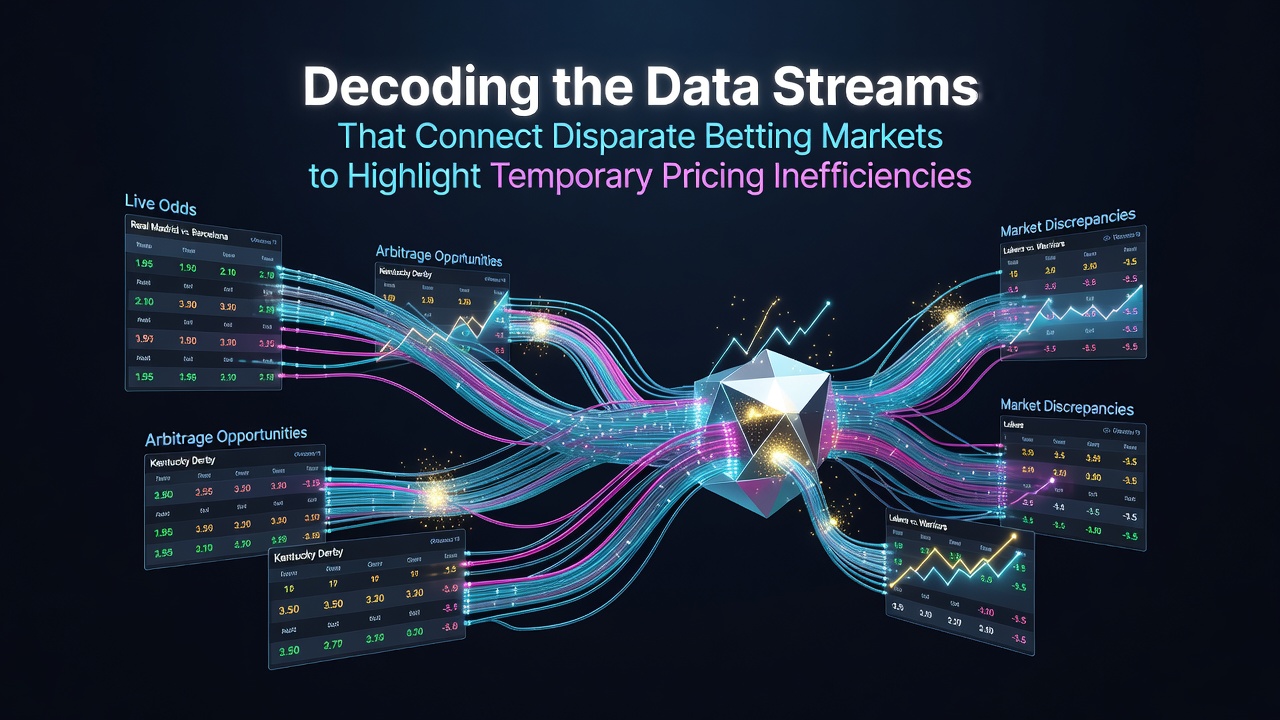
Betting markets operate through continuous flows of information that link bookmakers, exchanges, and data providers across regions, and observers note how these connections create brief windows where prices diverge before realignment occurs. Researchers tracking these patterns point to aggregated feeds from multiple jurisdictions that transmit odds updates in milliseconds, allowing systems to flag discrepancies that arise when one market absorbs news faster than another. Data indicates that such inefficiencies often last only seconds, yet they appear regularly in high-volume events where liquidity pools differ in depth and response time.
How Interconnected Feeds Reveal Market Gaps
Modern platforms pull live data from dozens of sources simultaneously, and analysts describe the process as a network where European exchange rates update against North American sportsbook lines while Asian market movements feed into the same stream. According to reports from the Australian Gambling Research Centre, cross-border data aggregation highlights instances where a single goal in soccer or a late injury report shifts one venue's pricing ahead of others by measurable margins. These differences emerge because transmission speeds vary and because some operators hedge positions more aggressively than competitors, which creates temporary mismatches visible only through synchronized monitoring.
Systems designed to scan these streams compare implied probabilities across correlated outcomes, and experts explain that a tennis match on one exchange might show a 52 percent chance for a player while a parallel futures market prices the same scenario at 49 percent. The gap narrows once volume increases, yet the interval between detection and closure provides the window that automated tools target. Studies from the Nevada Gaming Control Board show similar patterns in basketball and baseball, where in-game adjustments propagate unevenly across books that maintain separate risk models.
Real-Time Aggregation and Latency Factors
Latency remains a central variable because data packets travel different routes depending on server location and provider contracts, and those who've examined the infrastructure note that even sub-second delays can separate two otherwise identical markets. In June 2026, updates to certain exchange APIs introduced new compression protocols that reduced average latency by roughly 18 percent in tested environments, according to industry technical briefings. Observers note that this change compressed the duration of many inefficiencies while simultaneously increasing the volume of detectable events during peak hours.
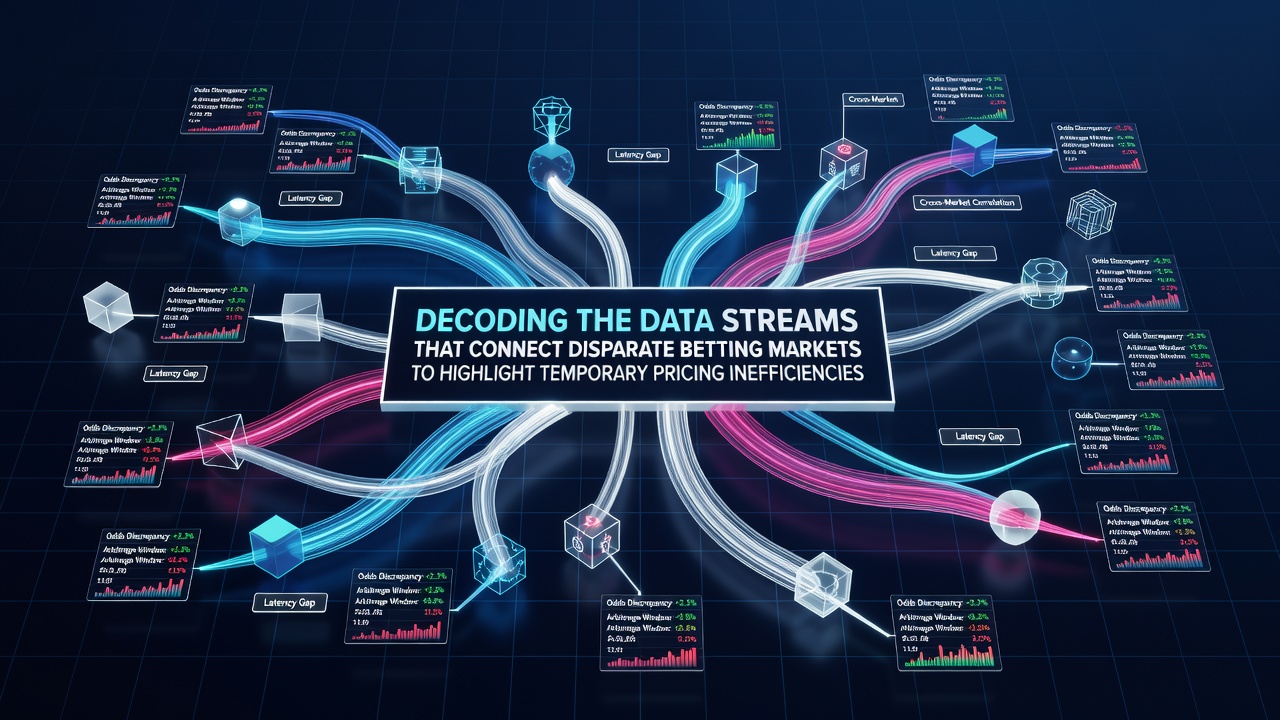
Take one dataset compiled during a major European football tournament where three separate books offered divergent totals on corner counts; the aggregated stream flagged the spread within 1.4 seconds, and subsequent volume closed two of the three gaps before the fourth minute of play. Researchers who reviewed the logs found that the remaining discrepancy persisted longer because one operator's feed carried an additional verification step that delayed its update. Such case studies illustrate how small technical differences compound into measurable pricing variance when markets operate in parallel rather than in isolation.
Correlation Mapping Across Event Types
Disparate markets sometimes link through shared underlying variables, and data scientists map these relationships by tracking how a shift in one outcome influences prices elsewhere. A change in a player's injury status, for example, can ripple from a single-game line into season-long futures and prop markets simultaneously, yet the speed of propagation differs by operator. Those who've studied these linkages report that correlation coefficients strengthen during high-liquidity periods and weaken when trading thins, which explains why inefficiencies cluster around lower-profile matches or less liquid propositions.
Software that processes these streams applies statistical filters to isolate genuine divergences from noise, and the process involves comparing expected versus observed movements against historical benchmarks. Evidence suggests that the most reliable signals appear when at least four independent sources confirm the same directional shift within a narrow time band. Operators in different regulatory environments apply distinct compliance overlays that further stagger update cycles, which adds another layer of variance that data streams capture but individual bettors rarely see without aggregation layers.
Conclusion
The infrastructure that moves odds data across borders continues to evolve, and the patterns it produces remain central to understanding how temporary pricing differences form and dissolve. Reports from multiple regulatory regions document consistent instances where synchronized monitoring identifies these windows, while technical improvements in 2026 have altered both their frequency and duration. Observers continue to track how latency, correlation strength, and operator-specific risk models interact within the broader network of connected markets.