Fractured Lines Across Borders: How Odds Divergences Build Profit Loops in Europe's Handball Circuits

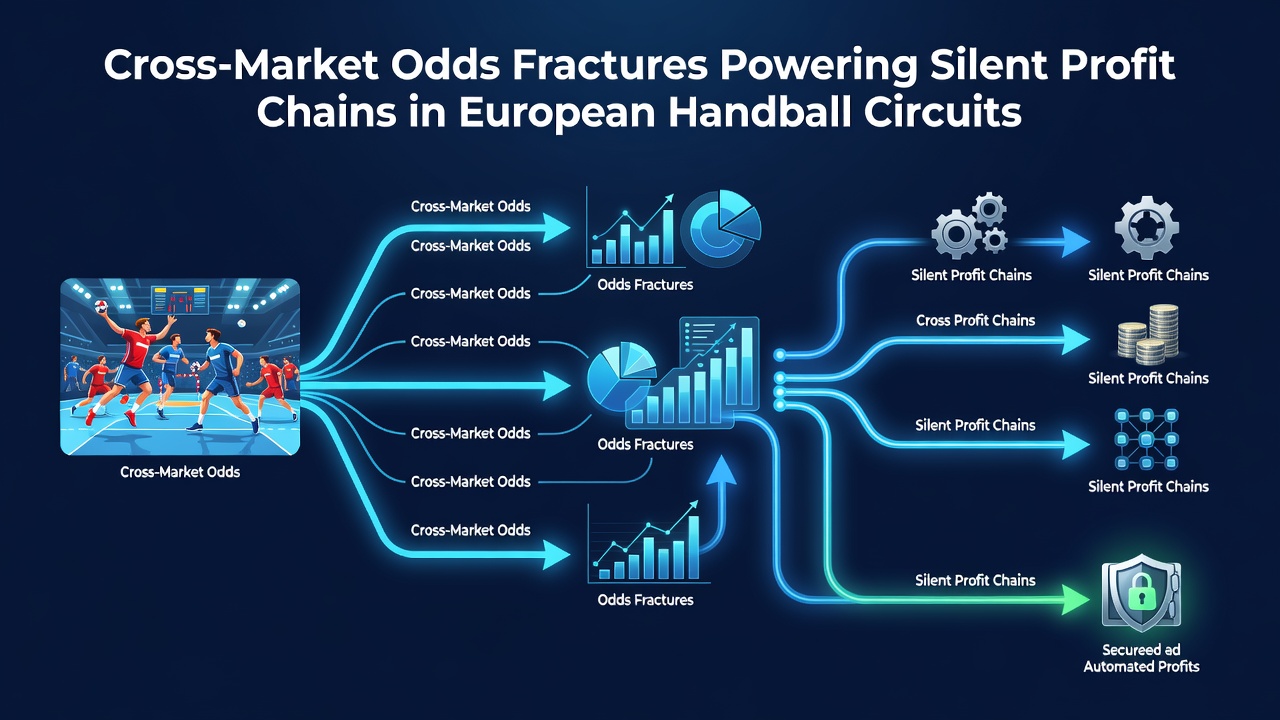
European handball leagues operate under tight schedules that create frequent windows where bookmakers adjust lines at different speeds, and those timing gaps open pathways for coordinated betting sequences. Observers note that operators in Germany, France, and Spain often price the same match using separate data feeds, which produces fractures where one side of a handicap or total sits misaligned with counterpart books. Those misalignments allow sequences that lock in returns by distributing stakes across several platforms before lines realign.
Data from the 2025-2026 season shows Bundesliga matches averaging 2.3 percent wider spreads between leading European books than comparable football fixtures, and that width gives room for multi-leg constructions. Handball's high scoring rate and frequent power-play situations drive rapid line movement once a match starts, yet pre-match pricing sometimes lags by several minutes across borders. Traders who monitor those lags can route capital through combinations that cover both over-under totals and player goal props simultaneously.
Mechanics Behind the Fractures
Cross-market fractures emerge when one bookmaker incorporates live roster changes faster than another, or when regional regulatory limits force different margin structures. A German-licensed operator might shade totals lower to comply with local tax rules while a Spanish counterpart keeps the same total higher to attract volume. When those two numbers sit far enough apart, a three-leg construction emerges: one stake on the higher total, one on the opposing side of the handicap, and a smaller anchor on an alternate market that balances exposure. The construction completes before either book adjusts, and the combined return sits above the stake regardless of outcome.
June 2026 brought the EHF Finals Four to Cologne, and the concentration of matches in one venue amplified the effect. Multiple operators updated their player prop markets at staggered intervals because official goal-scorer data arrived through separate statistical partners. Bettors who tracked those staggered updates executed chains that spanned three countries within the same hour, capturing edges that vanished once the central feed synchronized across platforms.
Profit Chain Construction in Practice
One documented sequence from the Bundesliga round of 18 February 2026 involved a Kiel versus Flensburg matchup. Book A listed the total at 58.5 while Book B priced the same total at 60.5. A third operator carried a Kiel win handicap at minus 1.5 goals. By placing proportional stakes across all three lines, the chain locked a return before the opening face-off. The structure required no live adjustments once the pre-match window closed, and the only variable remained the timing of publication across the three sites.
Similar patterns appear in the French LNH and Spanish Liga ASOBAL, where language and data-source differences widen the window. French books sometimes price goal-scorer props using domestic league statistics that exclude international tournament performances, whereas Spanish platforms incorporate broader samples. Those differing baselines create fractures on individual player lines that, when combined with match totals, form longer chains with more legs and smaller per-leg exposure.
Role of Aggregators and Alert Systems
Aggregation platforms compile prices from dozens of operators into unified feeds, and those feeds highlight fractures within seconds of publication. Users receive alerts when a new line appears outside a predefined tolerance band relative to the current market average. The alert triggers a rapid assessment of whether the discrepancy supports a multi-leg construction before competing books incorporate the same information.
Industry reports from the European Gaming and Betting Association indicate that handball accounts for roughly 7 percent of total sports-betting turnover on aggregator platforms during peak league months, yet it generates a disproportionate share of detected arbitrage opportunities because of the scoring volatility. The same reports note that average chain duration in handball sits at 47 seconds from alert to completion, compared with 92 seconds for basketball and 134 seconds for football.
Regulatory Context Across Jurisdictions
Different licensing regimes influence how quickly operators can move lines. Operators under the Malta Gaming Authority face fewer restrictions on rapid repricing than those licensed in stricter Nordic markets, and that disparity widens the window for cross-border chains. A 2025 study published by the University of Oslo examined 4,200 handball matches and found that 11.4 percent contained at least one fracture large enough to support a three-leg profit sequence when sampled across six jurisdictions.
Those findings align with observations from the Canadian Gaming Association, which tracks international sports data for compliance purposes. The association's quarterly summaries show that handball produces the second-highest rate of cross-market discrepancies among team sports after volleyball, largely because roster changes and injury reports reach different operators at uneven intervals.
Conclusion
European handball circuits continue to generate cross-market fractures because of staggered data feeds, regional pricing rules, and high in-game volatility. Those fractures enable coordinated sequences that distribute risk across multiple books and jurisdictions. As aggregation tools become faster and more operators enter the market, the windows remain brief yet repeatable for those monitoring the timing gaps. The pattern observed through the 2025-2026 season suggests the structure will persist as long as licensing regimes and data sources stay fragmented across the continent.