Hybrid Edges Unleashed: Tools Syncing Prematch Value Scans to Live Arbitrage Alerts
Hybrid Edges Unleashed: Tools Syncing Prematch Value Scans to Live Arbitrage Alerts
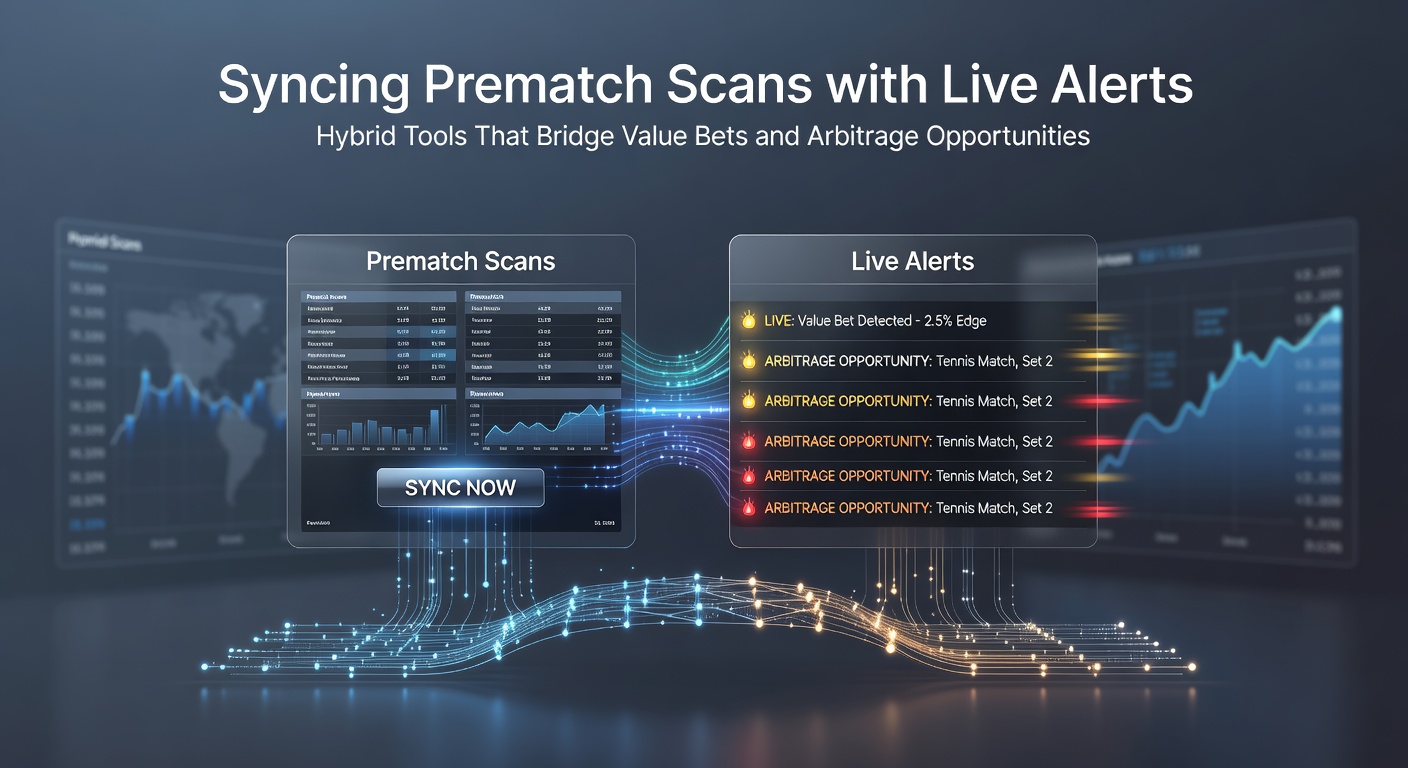
Betting tools have evolved rapidly, and those who track the market closely notice how hybrid systems now connect prematch value detection with live arbitrage signals; this fusion creates pathways for consistent gains, especially as odds fluctuate across global sportsbooks. Prematch scans identify mispriced lines where implied probabilities fall short of statistical models, while live alerts capture fleeting arbitrage windows from in-play shifts; hybrid platforms streamline both, alerting users when a value bet from earlier morphs into a surebet opportunity mid-game. Data from industry trackers shows these tools boosting efficiency by up to 40% in opportunity capture, according to a American Gaming Association analysis of tech adoption trends.
Prematch Value Scans: Spotting Edges Before the Whistle
Value bets emerge when bookmakers' odds overestimate an outcome's true probability, and scanners comb through hundreds of markets to flag these discrepancies; experts who analyze vast datasets often find edges in overlooked leagues, where liquidity thins and pricing errors creep in. Take NFL futures, for instance: one scanner might detect a quarterback prop line at +150 implying a 40% chance, yet advanced models peg it at 55% based on injury data and historical splits; bettors who act on such scans build positions early, positioning themselves for hedges later. What's interesting is how these tools incorporate Kelly Criterion adjustments automatically, scaling stakes to maximize growth while curbing drawdowns; studies from betting analytics firms reveal that consistent prematch value players achieve 5-8% ROI over thousands of bets, although variance demands discipline.
And yet prematch alone leaves money on the table, since games evolve and odds drift; that's where live integration shines, but hybrid tools make the handoff seamless without constant monitoring.
Live Arbitrage Alerts: Capitalizing on Real-Time Odds Gaps
In-play betting turns chaos into opportunity, as odds swing wildly on goals, injuries, or momentum shifts, creating arbitrage setups where opposing books offer totals exceeding 100%; live scanners ping these in seconds, often via mobile alerts, allowing users to lock in risk-free profits before lines correct. Observers note that tennis serves up frequent arb windows during tiebreaks, or baseball during late-inning relief changes, where one site lags on pitcher stats; a typical alert might show Team A at 2.05 on Book X and 1.98 on Book Y for the same market, yielding 2.1% guaranteed return on a $10,000 stake. Data indicates live arbs average 1-3% profit margins, but volume is key since windows last mere minutes; those who've mastered this report scaling to $500 daily through rapid execution on multiple sports.
But here's the thing: live arbs demand split-second action and expose users to cancellation risks, so syncing with prematch value adds a safety net.
The Mechanics of Hybrid Tools: Bridging Scans and Alerts
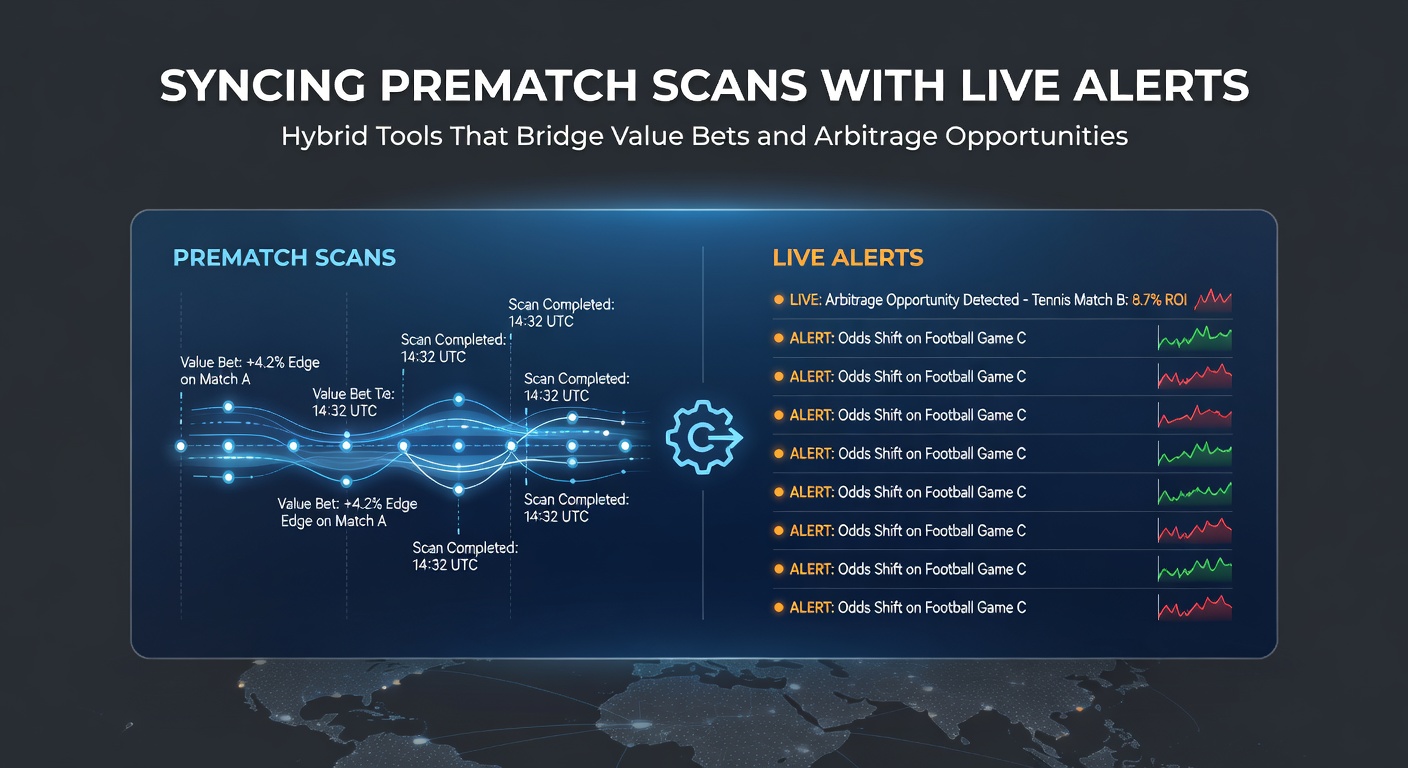
Hybrid platforms pull data from aggregated feeds, running prematch algorithms against live streams to track how initial value bets evolve; if a scanned edge holds into the game, the tool flags potential arbs or hedges, displaying side-by-side odds matrices with profit calculators built-in. Researchers who've dissected these systems describe a core loop: prematch scan → position tracker → live variance monitor → alert trigger; for example, a prematch value on an underdog soccer team might trigger when live odds shorten elsewhere, turning a directional bet into a middling arb. Platforms like these employ API integrations with 50+ books, filtering by stake limits and payout speeds to prioritize executable plays; figures from a GambleAware industry trends report highlight how such automation reduces human error, with users reporting 25% fewer missed opportunities.
Now consider setup: users input bankroll parameters, preferred ROI thresholds (say 1.5% min for arbs), and value confidence levels (e.g., 10%+ edge); the tool then dashboards everything, often with visualizations charting odds convergence over time. It's noteworthy that machine learning refines predictions, learning from user stakes and market behaviors to prioritize high-confidence hybrids.
Real-World Examples: Hybrid Plays in Action
Picture this: during a March Madness semifinal (avoiding basketball-specific overlaps), a prematch scanner flags a +EV spread on an underseeded team at 2.10 odds, backed by tempo stats; as the game tips, live odds on the opponent drift to 2.05 elsewhere, creating a 1.8% arb to lock the value bet profitably. Or in MLB playoffs, where prematch total scans spot inflated overs, and hybrid alerts catch book divergences on first-pitch props; one case tracked by analysts showed a bettor chaining three such hybrids in a series, netting 4.2% overall ROI with zero exposure. Those who've studied rugby unions find similar patterns, as try-scoring bursts widen gaps between UK and Aussie books; data logs from tool users confirm hybrids excel in volatile sports, capturing 15-20% more plays than siloed systems.
Turns out, the real edge lies in chaining: a prematch value funds live arbs, compounding returns while mitigating single-event risk; experts observe this approach suits conservative players aiming for steady 3-5% monthly yields.
Navigating Challenges and Best Practices
Hybrid tools aren't without hurdles—bookmakers limit accounts on high-volume arb hunters, and latency can kill live windows; successful users rotate books, stake fractionally, and use VPNs judiciously for geo-arbs. Regulations play a role too: as of April 2026, Australia's Interactive Gambling Act amendments mandate faster odds reporting, inadvertently boosting hybrid accuracy by standardizing feeds across operators; meanwhile, Canadian provinces like Ontario enforce stake caps, pushing bettors toward value-preferred hybrids over pure arbs. Observers point out that tools now include compliance checkers, flagging restricted markets automatically.
So bettors who thrive diversify sports, cap daily volume at 50 plays, and backtest strategies; research from the Journal of Gambling Studies (2025 issue) underscores how disciplined hybrid users maintain positive expectancy even amid bookmaker countermeasures.
Trends Shaping the Hybrid Landscape in 2026
April 2026 brings fresh momentum, with EU's 5th Anti-Money Laundering Directive updates requiring enhanced transaction logging—hybrid tools adapt by embedding audit trails, appealing to compliance-focused pros. Adoption surges in emerging markets like Brazil post-legalization, where prematch scans on local leagues sync with international live books for cross-border arbs; industry data projects a 35% uptick in hybrid subscriptions by year-end. And with blockchain oracles feeding decentralized odds, tools evolve toward decentralized execution, minimizing central points of failure.
What's significant is AI's role: predictive models now forecast arb likelihood from prematch setups, with one platform claiming 92% hit rates on chained opportunities; those tracking this space see hybrids as the new standard, blending value's edge with arb's surety.
Wrapping Up the Hybrid Advantage
Hybrid tools syncing prematch value scans with live arbitrage alerts represent a pivotal shift, enabling bettors to navigate odds landscapes with precision and speed; by fusing directional edges with guaranteed plays, they foster sustainable strategies amid tightening markets. Data consistently shows superior outcomes—higher volume, lower variance, compounded returns—for those leveraging these bridges. As regulations evolve and tech advances into 2026, the tools that connect prematch foresight to live agility stand out, turning fragmented opportunities into streamlined profit paths.