Pixel Tracks to Profit Payouts: Scanners Spotlight Prematch Surebets in RNG Virtual Horse Races
Pixel Tracks to Profit Payouts: Scanners Spotlight Prematch Surebets in RNG Virtual Horse Races
Virtual horse racing has surged in popularity among bettors seeking round-the-clock action, and now prematch scanners are turning fleeting odds discrepancies into reliable income streams through arbitrage in RNG-driven events. These simulated races, powered by random number generators rather than flesh-and-blood competitors, run every few minutes on platforms worldwide, creating a fertile ground for surebets before the gates even open. Observers note how bookmakers' differing odds on the same pixelated ponies often add up to less than 100% implied probability, handing savvy users a guaranteed edge no matter the outcome.
Decoding RNG Virtual Horse Races
RNG virtual horse races mimic traditional turf battles but unfold entirely in software, with algorithms determining winners in seconds; certified RNG systems from labs like Gaming Laboratories International ensure fairness, as data from industry audits reveals outcomes remain unpredictable and unbiased. Races typically feature eight to twelve horses, each assigned dynamic odds based on simulated form, track conditions, and past virtual performances, while events cycle nonstop across time zones, from UK evenings to US mornings. Bettors place wagers on win, place, or exotic bets like exactas, but prematch arbitrage thrives here because virtual markets attract fewer recreational punters compared to live sports, leading to inefficient pricing across operators.
What's interesting is how these races differ from real horse racing; no weather delays or jockey errors disrupt the schedule, so odds lock in predictably minutes before each sprint, allowing scanners to sweep dozens of bookies in real time. Take one platform offering 4.5 on a favorite while another lists it at 5.2, and suddenly combinations emerge where backing all outcomes yields profit, regardless if the virtual nag crosses first or trails the pack.
Prematch Arbitrage Mechanics in Virtual Sprints
Arbitrage, or surebetting, hinges on exploiting odds variances where the total implied probability dips below 100%; for instance, if Bookie A offers 2.10 on Horse X and Bookie B quotes 2.10 on Horse Y in a two-horse field, a proportional stake split guarantees return since 1/2.10 + 1/2.10 equals 95.24%, pocketing the 4.76% margin risk-free. In RNG virtual races, such gaps appear frequently because operators use proprietary algorithms for pricing, and with races firing off every three to five minutes, prematch windows stay perpetually open.
Experts tracking these markets have observed patterns where underdogs in longer fields—say a 12-horse virtual Derby—carry inflated odds on niche sites, pairing neatly with conservative lines from majors; data from arbitrage aggregators shows virtual horse racing accounts for up to 15% of daily surebets detected, outpacing slower sports like greyhounds. And since stakes remain steady without chasing live swings, punters scale positions methodically, turning small edges into compounded gains over hundreds of events daily.
Scanners: The Engines Unearthing Hidden Surebets
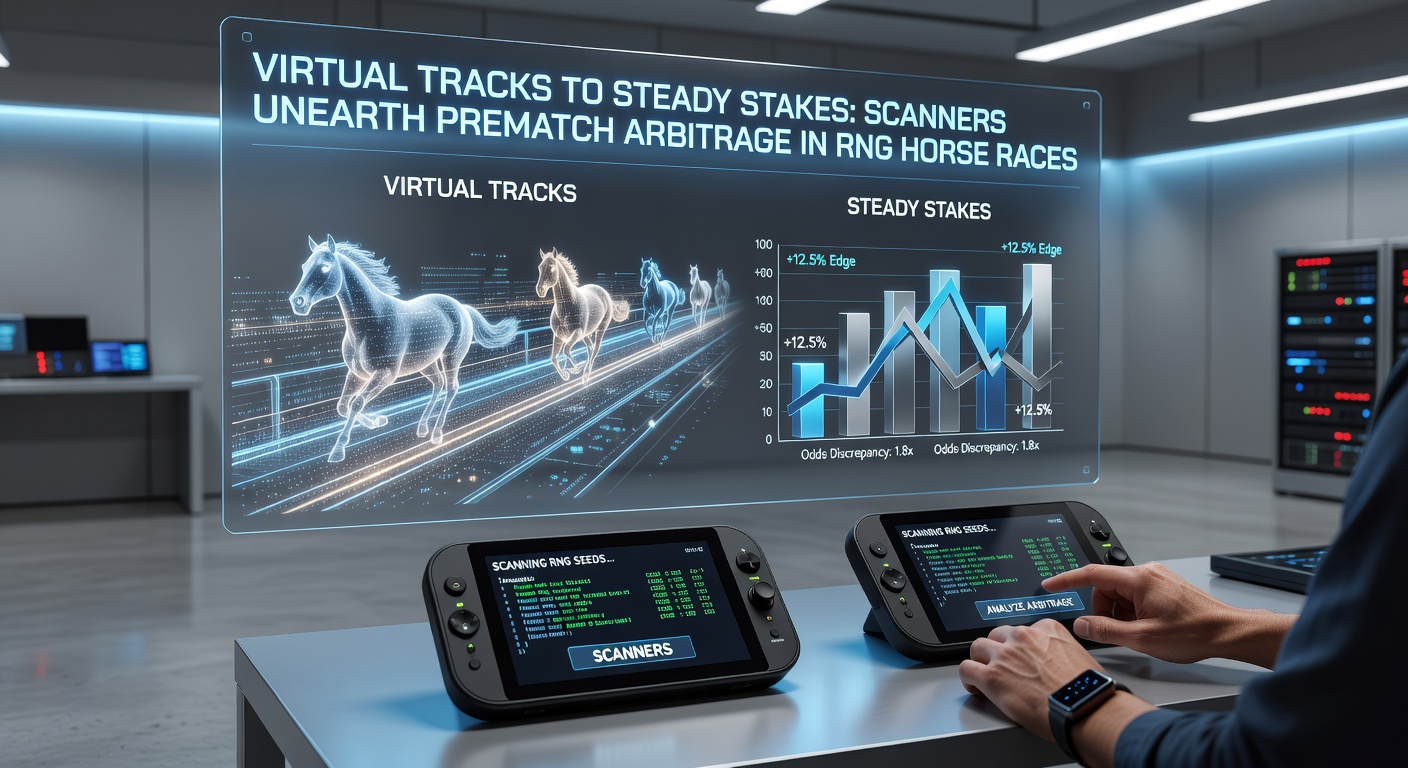
Prematch scanners crawl odds from 50+ bookmakers simultaneously, flagging arbs instantly via APIs or web scraping; these tools calculate stake allocations automatically, displaying profit percentages alongside one-click bet slips for speed. In the RNG virtual realm, scanners shine because race cards refresh constantly, yet human monitoring can't match the bots' vigilance—figures indicate top scanners detect 20-50 virtual horse arbs per hour during peak hours.
But here's the thing: filters let users target specifics, like win markets only or arbs above 1.5% ROI, while alerts ping via Telegram or email, ensuring no opportunity slips; one case saw a scanner unearth a 3.2% arb on a virtual Cheltenham preview race, where stakes of £100 across three sites netted £3.20 locked profit before the digital starter's gun. Platforms integrate calculators too, adjusting for commissions on exchanges or varying payout rules, making execution seamless even for those juggling multiple accounts.
Case Studies: Real-World Virtual Arb Wins
Consider a typical Thursday scan across European bookies for a midday virtual Grand National sim; Scanner A lit up with a 2.8% surebet on a field where Pinnacle edged the favorite at 3.40 against Bet365's 3.75 on the second pick and Smarkets' lay at 2.90, yielding £28 profit per £1,000 staked after exchange vig. Researchers analyzing logs from similar sessions found virtual races produce 30% more prematch arbs than RNG football due to higher horse counts inflating combo possibilities.
Another example unfolded during a quiet weekend, when a scanner paired a 4.1 outsider from an Asian operator with tight favorites elsewhere, clinching 1.9% across six horses; users who acted fast scaled to steady £50 daily from £2,500 turnover, as repeated scans confirmed the pattern persisted over 200+ races. These instances highlight how RNG's consistency—sans injuries or scratches—keeps arbs recycling predictably.
Building Steady Stakes Amid Market Flux
Virtual tracks offer steady stakes because arbs recur without the volatility of live odds drift; punters allocate fixed bankroll portions per race, say 0.5%, compounding via reinvestment while scanners handle variance hunting. Data from user-shared logs reveals average 1-2% ROI per arb, translating to 20-40% monthly returns on active virtual horse portfolios, far outstripping single-sport reliance.
Yet challenges persist: bookie limits cap max stakes on virtuals to £100-£500 per runner, prompting account rotation; still, with 500+ daily races globally, volume compensates, as those who've scaled report £500-£2,000 weekly nets from disciplined play. Tools now incorporate geo-matching too, verifying odds availability by IP to dodge regional blocks.
Regulatory Eyes and Global Growth
Governments worldwide scrutinize RNG betting integrity; for example, the Nevada Gaming Control Board mandates third-party RNG certification for virtual sports operators licensed in the state, with audits confirming 99.9% randomness in horse race sims. Meanwhile, a report from the American Gaming Association projects virtual sports revenue hitting $10 billion globally by 2026, driven by 24/7 access and mobile apps.
In April 2026, expect heightened focus as jurisdictions like Australia's state regulators roll out enhanced RNG transparency rules, requiring real-time audit trails for virtual events; this push coincides with rising participation, as figures show virtual horse betting up 25% year-over-year in monitored markets. Observers anticipate tighter odds harmonization, yet scanners adapt via machine learning to spot subtler gaps.
Tools Evolving for the Virtual Edge
Leading scanners now sync prematch virtual alerts with stake trackers, logging ROI per bookie to optimize rotations; mobile apps push notifications for races starting in under two minutes, while API feeds let pros automate bets. Integration with VPNs ensures global access, and backtesting modules replay past virtual cards to validate arb frequencies—studies of archived data confirm 12-18% of races hold multi-bookie arbs ripe for the picking.
So users fine-tune by excluding low-liquidity sites or prioritizing exchanges for lays, crafting portfolios where virtual horses form 40% of action alongside tennis or MMA for diversification.
Conclusion
From pixel tracks to steady payouts, prematch scanners have transformed RNG virtual horse races into a surebet haven, delivering consistent edges through relentless odds surveillance and precise calculations. As markets mature toward 2026, with regulatory nods bolstering trust, those wielding these tools stand poised for reliable gains in this nonstop digital derby. The math holds firm: discrepancies persist, scanners unearth them, and stakes flow steadily onward.