Precision Timing in Global Markets: How Aggregators Coordinate Multi-Platform Positions Across Fluctuating International Lines
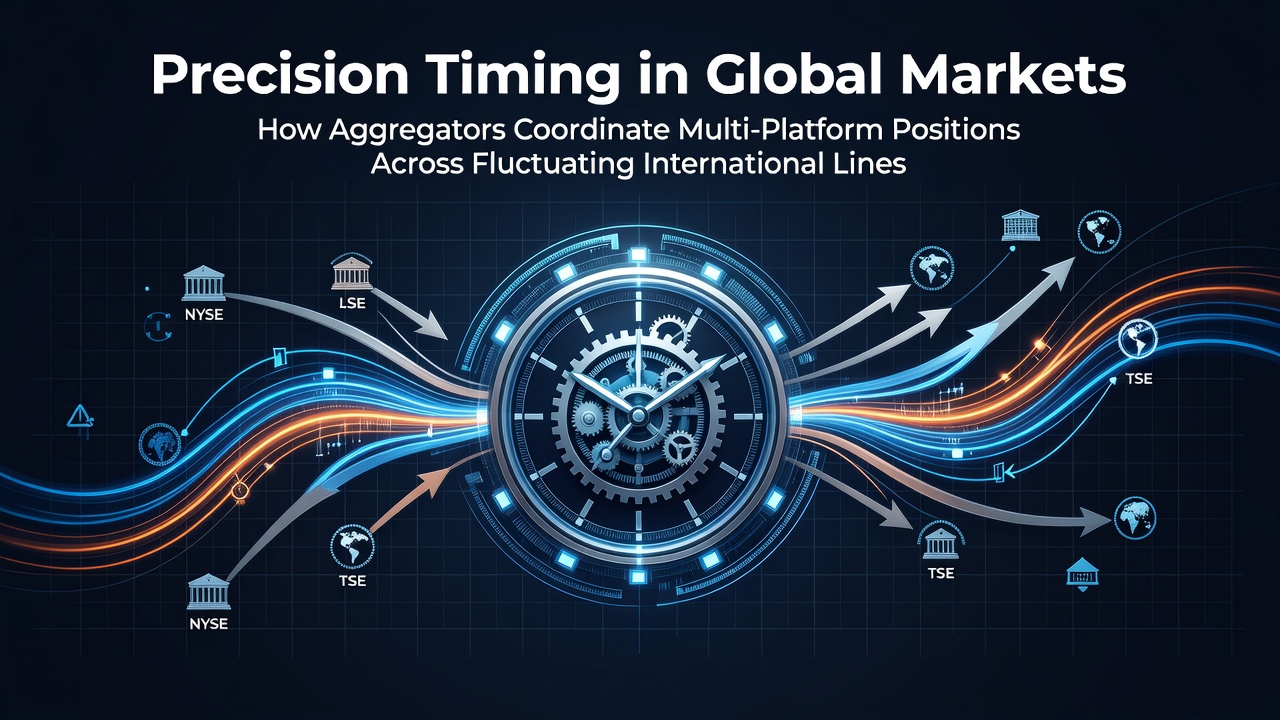
Global financial markets operate across multiple time zones where price movements in one region trigger immediate responses elsewhere, and aggregators play a central role in aligning these shifts for traders managing positions on various platforms. Data from exchanges in Asia, Europe, and North America flows continuously, yet the challenge lies in synchronizing entries and exits when liquidity levels and volatility patterns change without warning.
Understanding Aggregator Functions in Cross-Border Trading
Aggregators collect real-time quotes, order book depths, and execution reports from dozens of venues and then normalize that information into unified feeds that participants rely on for decision-making. These systems account for latency differences that arise because markets in Tokyo close before those in London open, and New York sessions overlap partially with both. Observers note that firms using aggregated data achieve tighter spreads during overlapping hours when volume spikes occur simultaneously across connected instruments.
Regulatory updates scheduled for July 2026 from bodies such as the European Securities and Markets Authority emphasize enhanced timestamp precision requirements, forcing platforms to upgrade their synchronization protocols. This adjustment affects how aggregators timestamp trades executed on venues operating under different daylight saving rules and holiday calendars.
Handling Fluctuations Across International Lines
Price lines shift rapidly when macroeconomic releases from one jurisdiction influence asset classes traded elsewhere, and aggregators must filter noise while preserving actionable signals. For instance, a surprise interest rate decision in Australia can alter currency pairs that trade actively on both Singaporean and Canadian exchanges within minutes. Systems coordinate these movements by applying weighted algorithms that prioritize the most recent, verified data points from each source.
Key Coordination Mechanisms
- Latency compensation models that adjust for transmission delays measured in microseconds
- Cross-venue reconciliation engines comparing executed volumes against reported aggregates
- Dynamic position sizing tools that recalibrate exposure limits based on live correlation matrices
Research conducted at the University of Toronto's Rotman School of Management examined execution records from 2024 through early 2025 and found that platforms relying on centralized aggregation reduced slippage by measurable margins compared with those using isolated feeds. The study highlighted how overlapping trading sessions between the New York Stock Exchange and the London Stock Exchange create windows where coordinated positioning becomes especially valuable.
Technical Infrastructure Supporting Precision
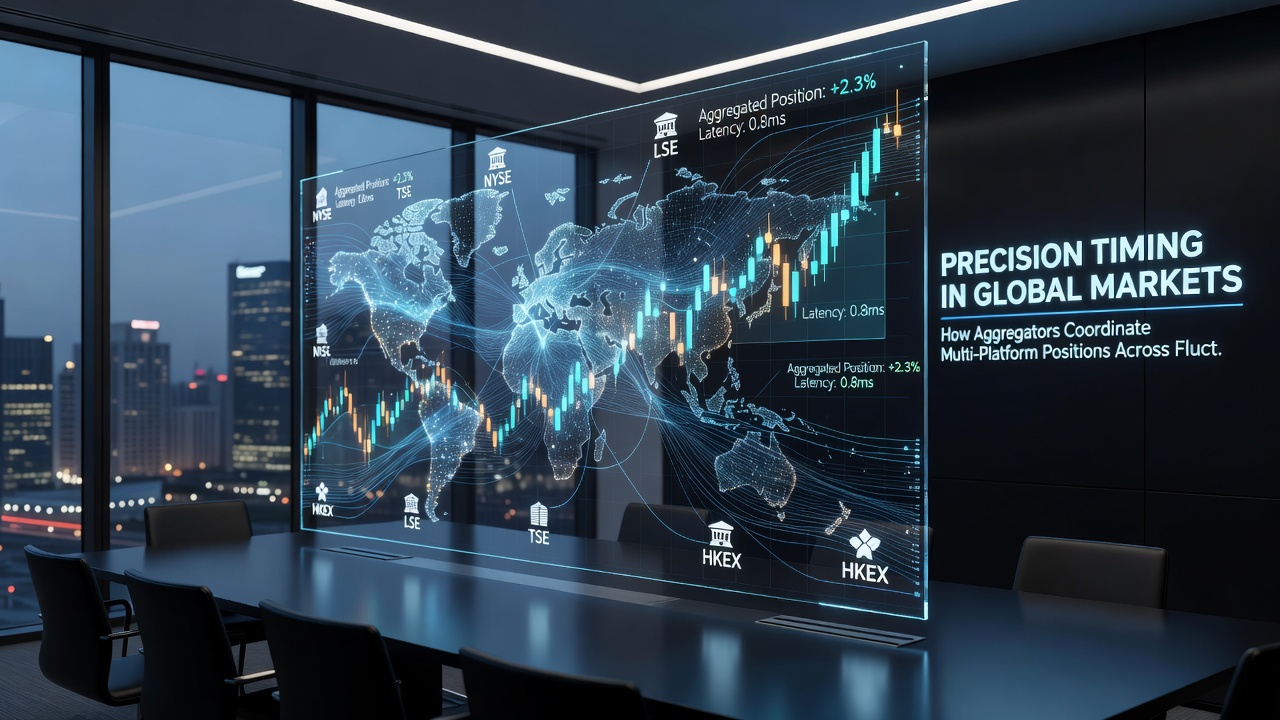
Modern setups employ atomic clock references and GPS-derived timestamps to maintain consistency across servers located in different continents. Aggregators route orders through smart order routers that evaluate available liquidity on each platform before committing capital. When one venue experiences a temporary outage or widened spreads, the system automatically redirects flow without manual intervention, preserving overall position integrity.
Industry reports from the Australian Securities and Investments Commission detail how participants adapted their aggregation layers following the 2025 volatility events triggered by commodity supply disruptions. Those adaptations included redundant data paths and fallback protocols that activate within predefined thresholds, ensuring continuous visibility even when primary feeds degrade.
Case Examples from Recent Market Activity
One documented instance occurred during the July 2025 earnings season when technology sector announcements from U.S. firms influenced semiconductor valuations listed on exchanges in Taiwan and South Korea. Aggregators processed the incoming data streams, applied currency conversion adjustments, and presented consolidated risk metrics that allowed managers to adjust hedges across three separate platforms simultaneously. The coordinated response limited drawdowns that might otherwise have compounded through sequential, unlinked adjustments.
Another pattern emerges around central bank announcements where forward guidance statements move bond yields globally. Aggregators integrate yield curve data from U.S. Treasuries, German Bunds, and Japanese Government Bonds into single dashboards, enabling traders to monitor relative value shifts without switching between separate terminals.
Future Developments Expected by 2026
With the July 2026 regulatory milestones approaching, market participants anticipate further standardization of message protocols that will streamline aggregator interoperability. Pilot programs already underway test blockchain-based timestamping for certain derivatives contracts, aiming to reduce disputes over execution priority during high-velocity periods. Data indicates these enhancements could compress the window between signal detection and position adjustment by additional fractions of a second.
Conclusion
Precision timing remains essential for maintaining coherent positions when markets span multiple jurisdictions and operate under varying conditions. Aggregators serve as the connective tissue that transforms disparate data streams into actionable intelligence, allowing participants to respond coherently to fluctuations that cross international lines. Continued infrastructure investments and regulatory alignment through 2026 will shape how these coordination capabilities evolve in response to growing volumes and complexity.