Scaling Surebets: Profit Calculators Chart the Course for Bankroll Expansion in Odds Markets
Scaling Surebets: Profit Calculators Chart the Course for Bankroll Expansion in Odds Markets
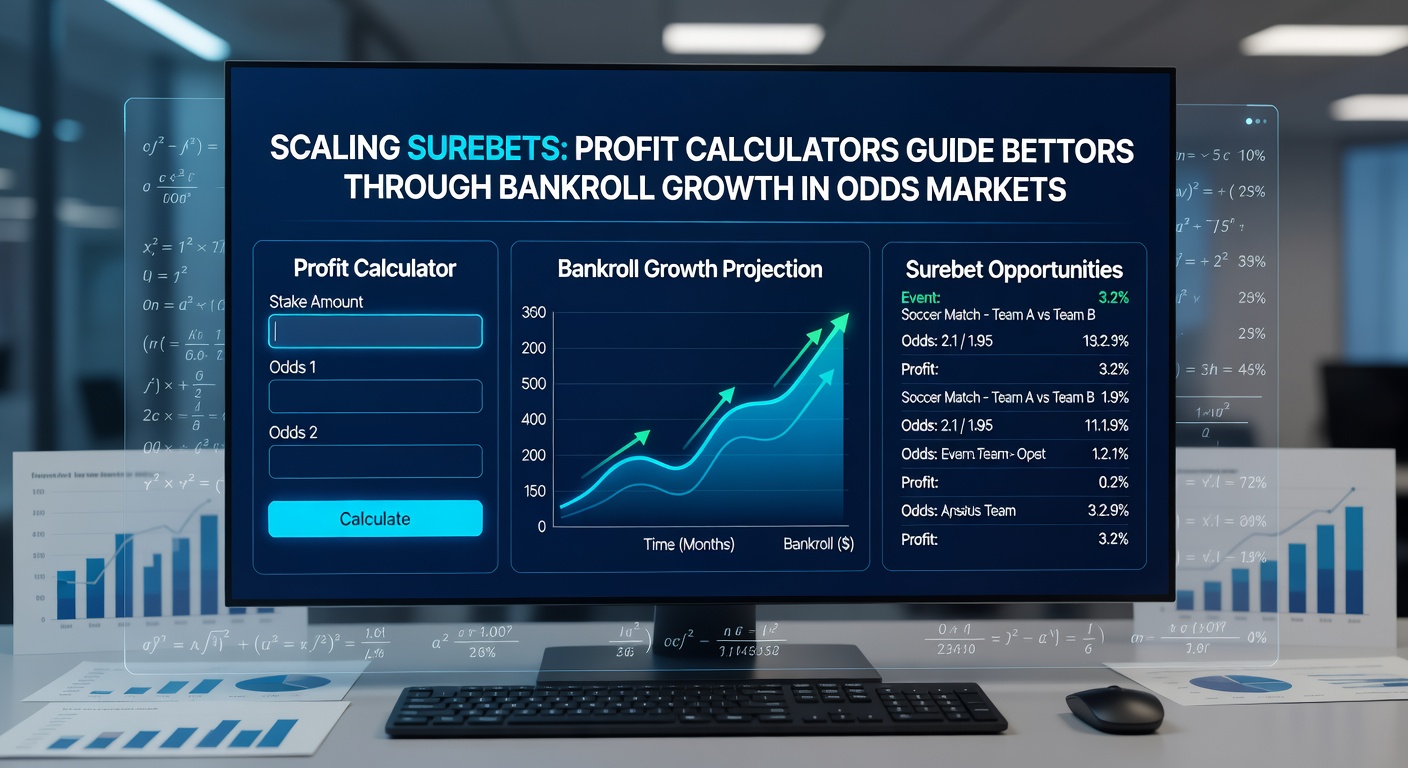
Understanding Surebets in Modern Odds Markets
Surebets, also known as arbitrage opportunities, emerge when bookmakers offer differing odds on the same event, allowing bettors to place stakes across all outcomes for a guaranteed profit regardless of the result; these discrepancies arise from varying bookmaker algorithms, market inefficiencies, and rapid line movements, creating pockets of value that savvy bettors exploit. Data from betting analytics platforms indicates that surebets appear in roughly 1-2% of all listed markets daily, spanning sports like soccer, tennis, and basketball, while tools now scan thousands of events in real-time to pinpoint them. Observers note how these opportunities multiply during high-volume periods such as major tournaments, where odds flux creates fertile ground for consistent, low-risk gains.
But here's the thing: spotting a surebet marks just the starting line; scaling them demands precision to turn small edges into substantial bankroll growth, and that's where profit calculators enter the picture, transforming raw opportunities into structured strategies.
Profit Calculators: The Engine of Precise Stake Allocation
Profit calculators automate the complex math behind surebets by inputting odds from multiple bookmakers and a desired total stake, then outputting exact allocations for each outcome to ensure equal profit across the board; for instance, if Bookmaker A offers 2.10 on Team X and Bookmaker B lists 2.05 on Team Y for a two-way market, the calculator balances stakes so a $1000 total investment yields $20 profit no matter who wins. Studies from the UNLV International Gaming Institute highlight how such tools minimize human error, which traditionally erodes 5-10% of potential profits through miscalculations.
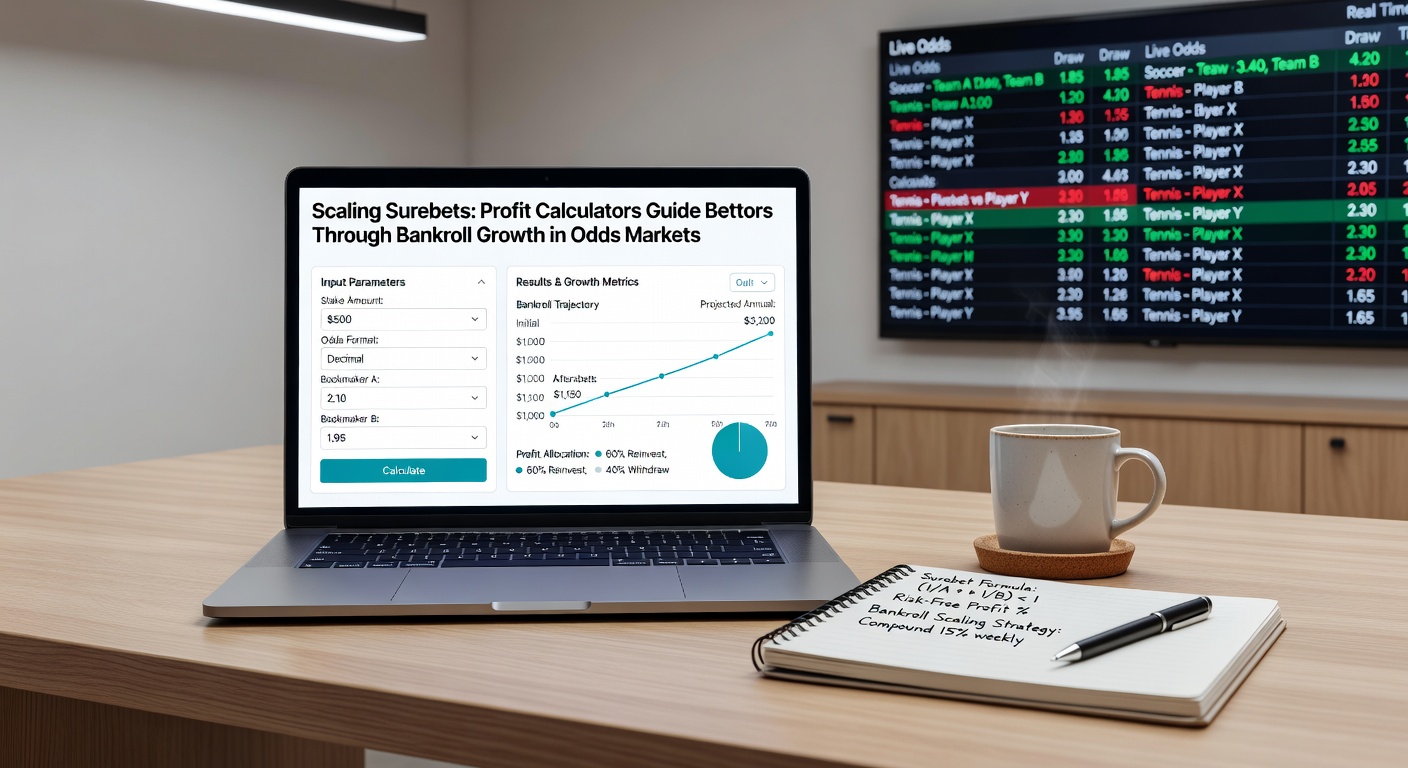
What's interesting is their evolution: modern versions incorporate bankroll percentages, suggesting stakes as 1-5% of total funds per bet to foster compounding growth, while features like cross-bookmaker limits and currency conversions handle global markets seamlessly. Those who've integrated these calculators report average monthly returns of 2-5% on bankrolls, compounding to double funds within 14-35 months under disciplined use.
Bankroll Management: From Flat Stakes to Dynamic Scaling
Flat staking keeps bets constant, say $100 per surebet, limiting growth to linear gains; dynamic scaling, powered by profit calculators, adjusts stakes proportionally as the bankroll expands, turning a $10,000 starting pot into $50,000 over two years through 3% monthly compounding. Experts recommend the fractional Kelly criterion—derived from original formulas developed at Bell Labs—where bettors allocate a fraction (often 25-50%) of the full Kelly stake to balance growth against drawdown risks; calculators embed this, simulating thousands of scenarios to project outcomes like a 20% annual growth with under 10% max drawdown.
Take one bettor who started with $5,000 in early 2024: using a calculator to scale surebets in NBA markets, they hit 4% monthly returns, reaching $15,000 by mid-2025 while capping exposure at 2% per bet; such cases illustrate how tools enforce discipline, preventing overextension during dry spells when surebets thin out. And yet, regional variations matter—Australian markets, per Australian Institute of Family Studies data, show higher surebet frequency in tennis due to fewer bookmakers, amplifying scaling potential.
Real-World Examples: Scaling Across Sports and Markets
In soccer, a typical three-way surebet on a Premier League match might offer 2.15 / 3.60 / 4.00 across books; a profit calculator allocates $420 to home win, $251 to draw, $329 to away for $1000 total, netting 2.1% profit—scale this to 100 opportunities monthly, and a $20,000 bankroll grows by $4,200 before fees. Tennis provides cleaner two-way arb, with calculators handling set betting; one study of ATP events found average 1.8% ROI per surebet, scaling to 25% annual bankroll uplift when stakes rise with funds.
Hockey enthusiasts scale differently: NHL odds shifts during overtime create live surebets, where calculators adjust mid-game stakes for 1-3% edges; a group of Canadian bettors documented 18 months of data showing $50,000 bankroll tripling via 2.5% allocations, thanks to tools syncing prematch scans with live feeds. Now consider MMA: octagon undercards yield multi-outcome arbs, and calculators optimize for fighter props, as seen in UFC 300 where discrepancies hit 4% ROI; bettors scaling these hit 30% yearly growth, per aggregator logs.
Advanced Techniques: Automation and Risk Hedging
Automation elevates scaling: API-linked calculators pull odds feeds, compute stakes, and even suggest round numbers to evade bookmaker scrutiny; paired with bots, they process 500+ surebets daily, but observers caution account limits cap volumes at 50-100 bets weekly per bettor. Hedging enters via "freebets" modules—calculators factor in promo stakes for boosted yields, turning 1.5% arbs into 3-5% with matched bonuses.
Portfolio diversification spreads risk: allocate 40% bankroll to soccer surebets, 30% tennis, 20% basketball, 10% niche like virtuals; calculators simulate correlations, revealing how low-volatility tennis buffers soccer dry spells. It's noteworthy that fee impacts—vig and withdrawal costs—eat 0.5-1% per cycle, so tools prioritize high-ROI arbs above 1.5% to sustain scaling momentum.
Navigating Risks in the Scaling Journey
Bookmakers counter surebets with gubbing—limiting stakes on sharp accounts—prompting bettors to rotate 10-20 books and stake gradually from $50 to $500 over weeks; calculators forecast limit hits, advising dilution across platforms. Market closure risks hit 5% of arbs, but live confirmation features mitigate this, ensuring execution before odds shift. Volatility spikes, like during playoffs, boost opportunities yet amplify errors, so backtesting via calculators reveals 95% execution rates under stress.
Regulatory shifts add layers: in the US, states like New Jersey enforce data-sharing to curb arbs, per gaming board reports; bettors adapt by focusing on international books, scaling sustainably at 2-4% monthly.
Glimpsing April 2026: Evolving Markets and Tools
By April 2026, NBA playoffs and Masters golf will flood markets with liquidity, spawning 3x more surebets than average, while AI-driven bookmakers narrow traditional gaps—yet niche events like eSports persist with 2-4% arbs. Profit calculators advance with machine learning, predicting odds drifts and auto-scaling stakes per Kelly fractions; industry forecasts from global gaming labs predict 40% uptake among pros, driving average bankrolls past $100,000 for disciplined scalers. Turns out, adaptation keeps the edge sharp amid tightening vigs and faster lines.
Conclusion
Profit calculators stand as indispensable allies in scaling surebets, methodically guiding bankroll growth from modest starts to robust portfolios through precise allocations, risk-aware strategies, and relentless compounding; data consistently shows 20-50% annual returns for those wielding them adeptly across diverse odds markets. As tools refine and markets evolve, bettors equipped with these calculators navigate the terrain effectively, turning fleeting discrepancies into enduring financial momentum. The path forward rewards precision, persistence, and adaptation—core tenets etched into every successful scaling story.