Volleyball Betting Frontiers: Cross-Market Aggregators Driving Hybrid Value and Arbitrage Tactics

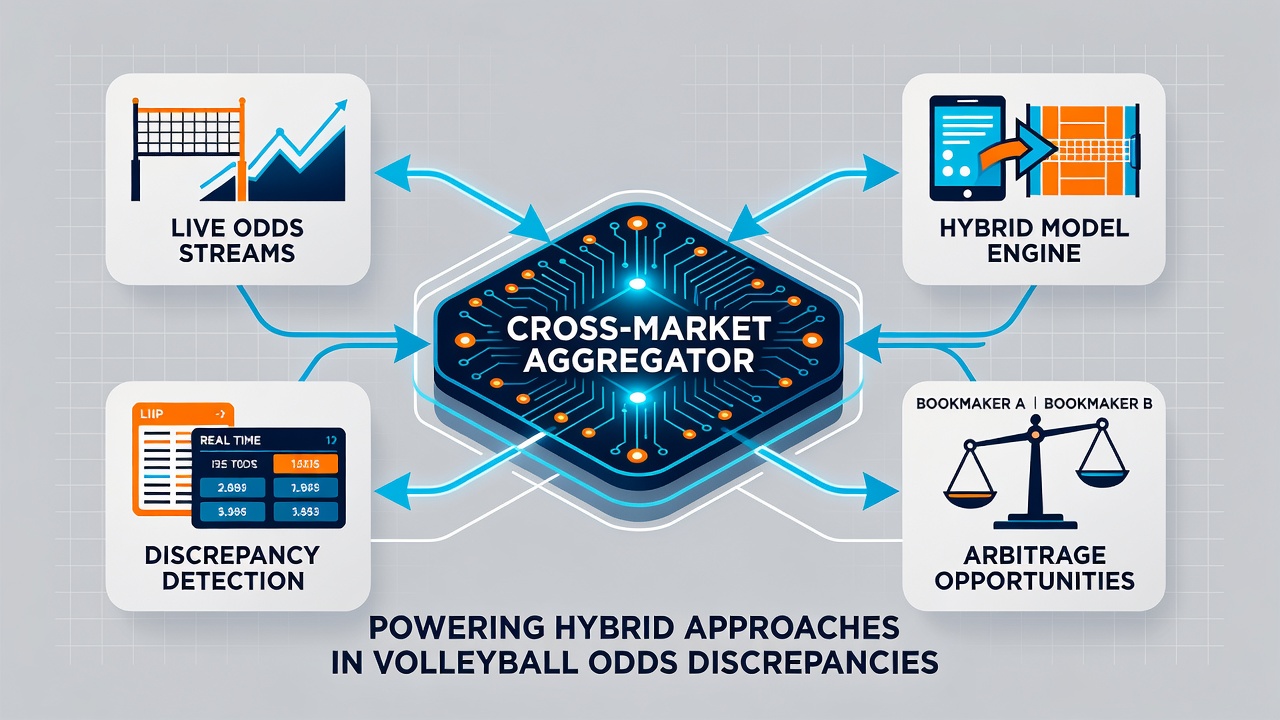
Volleyball odds discrepancies arise when bookmakers price the same match differently across various markets, and cross-market aggregators compile these variations into unified platforms that support hybrid strategies combining prematch value detection with live arbitrage execution. These tools scan dozens of operators simultaneously, flagging instances where a set winner price on one site diverges from the corresponding point spread or total on another, allowing bettors to construct positions that exploit the gap without assuming directional risk.
Mechanics of Aggregator Data Collection
Aggregators pull real-time feeds from international and regional operators, normalize the data into comparable formats, and apply algorithms that calculate implied probabilities across moneyline, handicap, and over-under lines for beach and indoor volleyball events alike. When a discrepancy exceeds a predefined threshold, the system generates alerts that detail the exact stake distribution required to lock in a margin, often within seconds of the odds movement. Observers note that volleyball lends itself particularly well to this process because matches feature frequent set-level breaks and rapid point swings that create temporary imbalances between prematch models and in-play adjustments.
Hybrid Strategy Construction
Hybrid approaches integrate prematch value scanners that identify mispriced long-term outcomes with live arbitrage calculators that monitor micro-movements during individual sets. A typical sequence begins with an aggregator highlighting an inflated underdog price in the prematch window, followed by placement of a partial stake that later pairs with an opposing live position once the match begins and the line shifts. Data from industry monitoring services shows these layered entries appear most frequently in high-profile tournaments where liquidity concentrates on main markets while secondary set betting remains thinner.
Case Examples from Recent Seasons
One documented pattern involves European league matches where opening totals on totals markets sit several points higher than the corresponding set handicap equivalents offered elsewhere, prompting aggregators to surface the divergence before tip-off. Bettors then allocate portions across the two books, adjusting the live leg once the first set concludes and fresh odds reflect actual scoring pace. Another recurring scenario occurs in Olympic qualification events, where regional bookmakers adjust prices more slowly than global platforms, creating brief windows that aggregators capture through continuous polling.
Role of Timing and Liquidity
Volleyball schedules cluster around major international windows, and aggregators track volume surges that accompany these periods because higher liquidity reduces the duration of discrepancies yet simultaneously increases their frequency. June 2026 aligns with several continental championships that historically produce elevated betting activity, and monitoring platforms already record preliminary increases in cross-market alerts for qualification fixtures. Researchers tracking operator behavior indicate that thinner overnight markets in lower-tier leagues generate the largest percentage gaps, whereas marquee matches require faster execution speeds to secure the arbitrage leg before prices converge.
Regulatory Context Across Jurisdictions
Operators licensed in multiple regions must comply with varying transparency rules that affect how quickly they can adjust lines, indirectly influencing the opportunities aggregators detect. Reports from the Australian Gambling Research Centre highlight that structured data feeds help maintain compliance by logging all price movements, while similar frameworks in North American provinces emphasize responsible gambling thresholds that limit stake sizes on identified discrepancies. These differing requirements mean aggregators serving international users often segment alerts according to the user's licensed jurisdiction.
Technical Integration Challenges
Building reliable connections between aggregator dashboards and individual bookmaker APIs demands constant maintenance because endpoint changes and rate limits can interrupt data flow during peak tournament hours. Teams maintaining these systems employ redundant parsing methods that fall back on alternative sources when primary feeds experience delays, ensuring continuity for users constructing hybrid positions. Studies published by academic groups examining sports data integrity note that volleyball scoring granularity supports precise reconciliation checks that other sports with continuous clocks do not always provide.
Future Developments in Aggregator Capabilities
Emerging versions incorporate machine-learning layers that refine discrepancy thresholds based on historical volatility patterns specific to volleyball subsets such as women's indoor versus men's beach competitions. These enhancements allow the platforms to prioritize alerts with higher historical conversion rates while filtering noise from low-liquidity side markets. Industry associations tracking technology adoption report steady growth in hybrid tool usage as more operators expand live offerings for volleyball tournaments scheduled through 2026 and beyond.
Conclusion
Cross-market aggregators continue to reshape how discrepancies in volleyball odds translate into executable hybrid strategies by supplying structured data and synchronized alerts that connect prematch analysis with live execution. As tournament calendars intensify and operator coverage expands, the precision of these platforms determines the scale at which such opportunities remain accessible across different regulatory environments.